
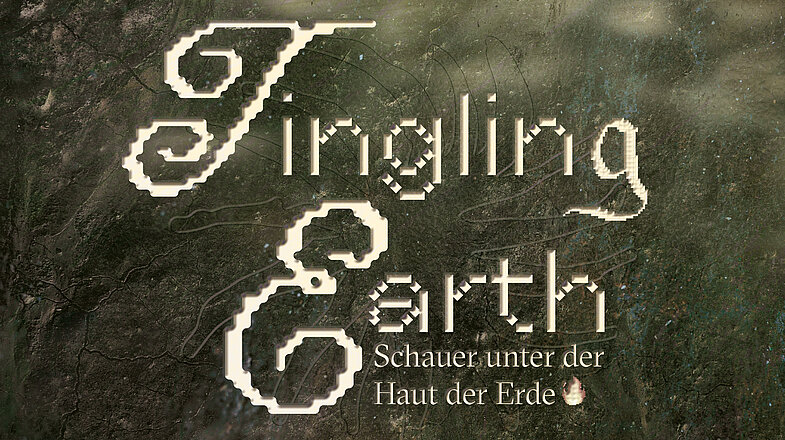
A teaspoon of healthy soil contains more microorganisms than there are humans on Earth, and a healthy soil microbiome is increasingly being linked to a healthy human gut flora: soil is not only beneath us, but also within us.
Soil, as part of a multitude of interwoven (earth-)realities, comes to the fore above all during global crises — in the struggle over resources, as territory, as a supplier of raw materials. At the same time, its ecological dimension reveals itself when the raw materials run dry and devastated, contaminated areas are left behind.
The focus on soil raises the question of the foundation on which a community can grow, in the sense of an equal, solidary, and convivial coexistence. The exhibition Tingling Earth – Schauer unter der Haut der Erde 🔥 is an invitation to reflect on our present, on new realities, and on visions of a future oriented toward the common good.
The exhibition understands itself as an open space for discussion, shared learning, practice, and change. Accordingly, workshops will take place shortly before the opening as well as throughout the run, to which the interested public is invited.
What potential lies in art to develop practices through which kinships (re)emerge and their structures become visible? On what soil might an ecological union take shape?
Building on the exhibition Unheimliche Verschiebungen (Urbane Künste Ruhr), the Künstler*innenhaus Dortmund presents, with Tingling Earth – Schauer unter der Haut der Erde 🔥, a group exhibition that can be understood as an exhibition-within-an-exhibition.
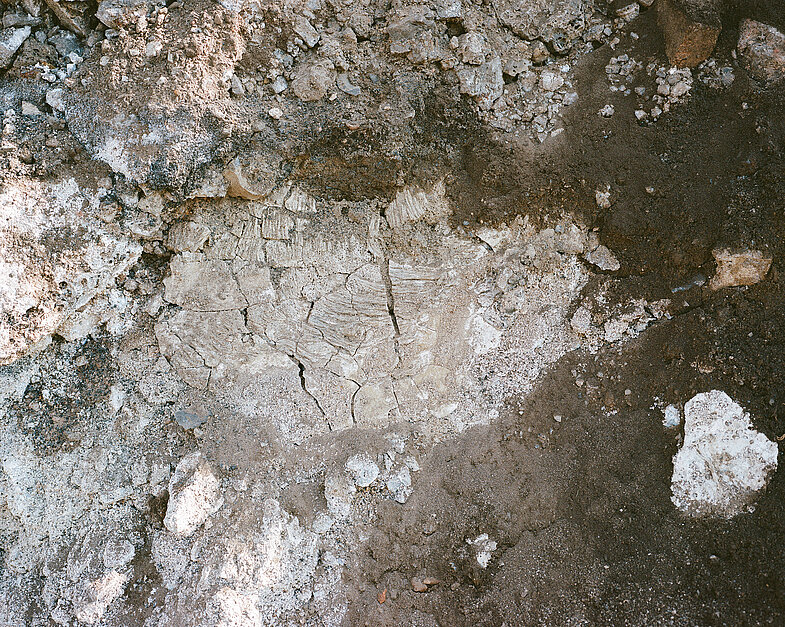
MATTERS.xyz is a creative research duo that explores new territorial narratives through creation and curation, founded by Valentin Bansac and Alice Loumeau. Their investigations portray the entanglement of human and non-human trajectories through political and ecological controversies.
Valentin works with photography and film; Alice focuses on writing and cartography. Their field works have ranged from the mining territories of the Swedish Arctic, to the burnt forests of Southern France and the oil fields of Western Texas. MATTERS.xyz participated in several exhibitions, publications and residencies, including Villa Albertine, TBA21, Biennale di Venezia, POUSH and F’AR Lausanne, among others. Soils Archives: Digging for Thick Commons, which will be adapted for the exhibition at Künstler*innenhaus Dortmund will be a cooperation between the artists and the Geological Collection of the Ruhr Museum.
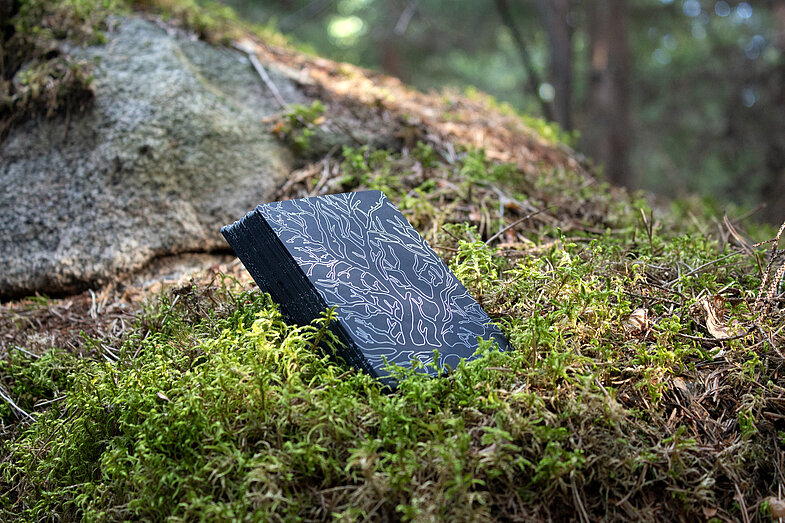
Lisa Biletska lives in Kyiv and works with text, translation, and computers. Her ongoing project is Noha—a journal of literary documentary writing. Since russia’s full-scale invasion of Ukraine, Lisa has worked with documenting fires on the Kinburn peninsula; toxic waste in the Black Sea; and Ukrainian children living as refugees on the Curonian Spit. Glowwood (2020) is a deck of ecological cards that serves as an open-ended poetic framework for conversation. At Künstler*innenhaus Dortmund this August, Lisa will host two group Glowwood sessions for residents and the public.
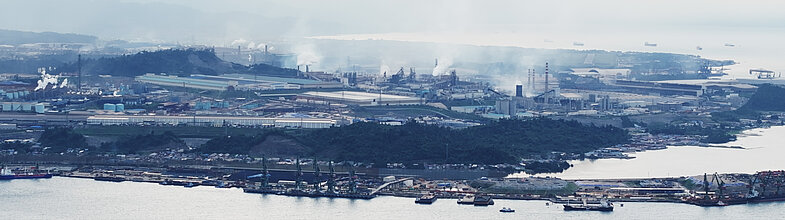
Viktor Brim (b. 1987, Uzbekistan) examines how power and infrastructure inscribe themselves into territory, from post-Soviet extraction zones to the maritime corridors of the New Silk Road. Working with operative and satellite imagery, he traces how the seemingly immaterial digital economy rests on a dense material substrate, from the mineral deposit to the render surface, turning peripheral landscapes into operational fields. His films and installations dwell on depopulated sites in long, static takes, pairing documentary footage with 3D synthesis. He has exhibited at M HKA Antwerp, Eye Filmmuseum Amsterdam, and the Kurzfilmtage Oberhausen. He is based in Cologne.
Emerson Culurgioni is a media artist and filmmaker whose work explores the interactions between industrial structures, spatial change and socio-economic power relations. His focus is on how visible and invisible influences transform physical, digital and social spaces. He combines documentary and essayistic approaches to investigate aesthetic and structural entanglements of power and resource control. His films LEUNA, HABITAT, LA DUNA and AUSBEUTUNG have been shown in exhibitions and at international festivals. Trained at the Academy of Visual Arts Leipzig (HGB) under Alba D'Urbano and Clemens von Wedemeyer, he has since shown his work at venues including Visions du Réel and the Saxon State Exhibition.
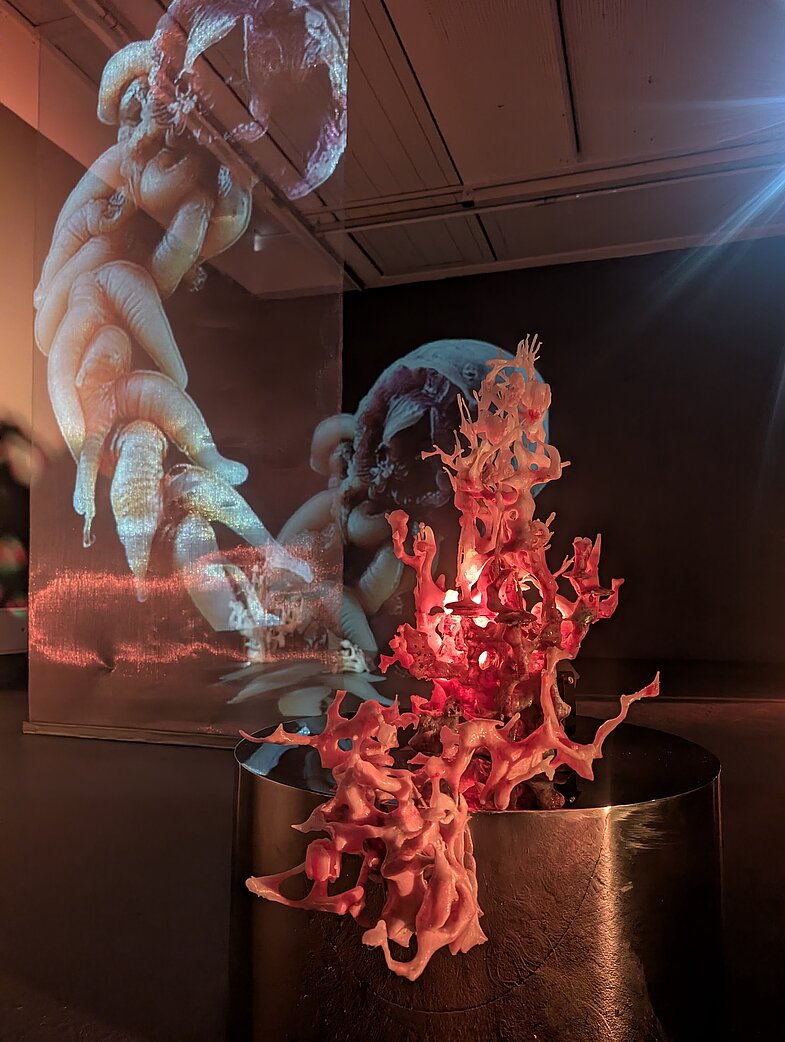
Anna Charlotte Frevel´s work includes painting, installation and sculptural practices, as well as algorithmic image and form generation. At its core lies the investigation of form as the result of dynamic interactions between biological, material, and technical systems.
Based on processes of image transformation and material-driven form genesis, her works emerge through the overlapping of digital and analog processes. Generated image structures are translated into painting, materials develop their own dynamics in open processes, and algorithmically modeled growth processes are transferred into spatial situations. In collaboration with Maximilian Dörbecker, sculptural works are also created in which material unfolds as an active component of form-making and interacts with space and environment.
Frevel also works as a theatre educator and develops performative formats that engage with the construction of memory and biography as collective processes. This perspective also informs her visual practice, in which images appear as unstable condensations of cultural and personal inscriptions. Form is not understood as a closed entity, but as an emergent constellation in which authorship becomes visible as a distributed, ongoing process.
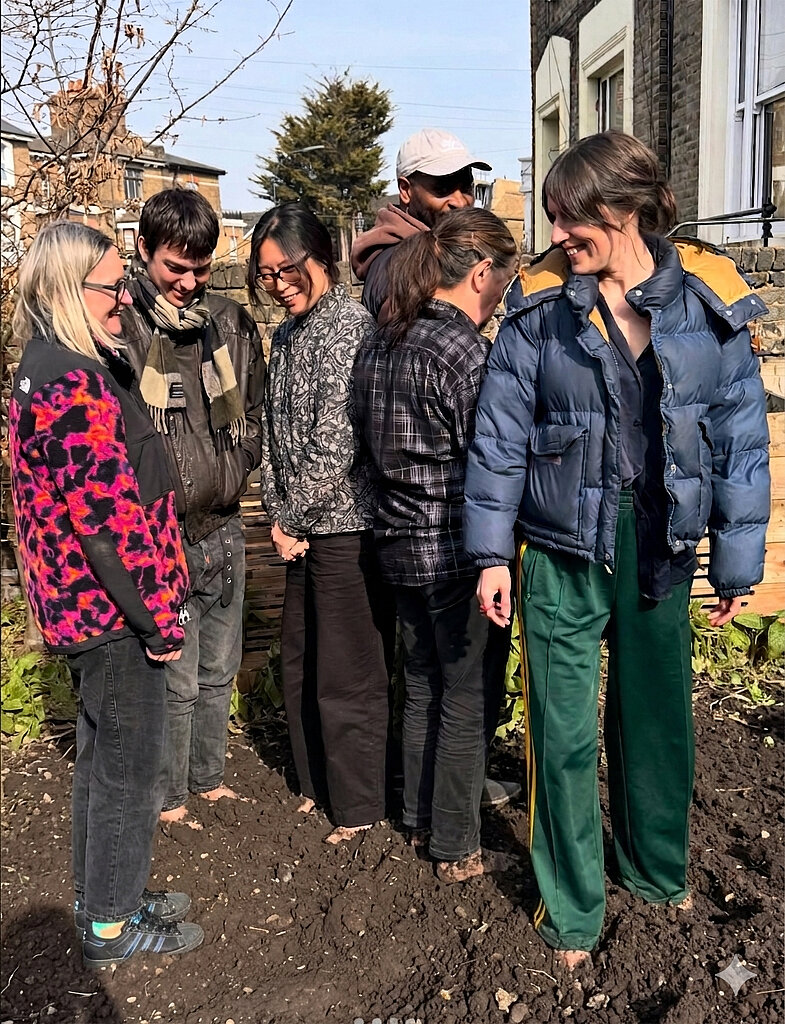
Paul Granjon is an artist and educator whose early work with self-made robots explored the co-evolution of humans and machines with a humorous and critical perspective. The work questioned the validity of a creeping digitization that tends to replace living beings with digital programs and creatures, supporting a society based on economic profit, surveillance and extraction. His interest in vital issues of resilience and ecological implication grew over the years, based on the conviction that a renewed relationship with plant, animal and mineral beings and environments, combined with a radically re-imagined use of technology are crucial pre-requisites for a good life on earth. Several recent works explore the potential of electrogenic soil bacteria - microbes that generate tiny amounts of electricity - for artworks, citizen science and public engagement. Paul is a member of the Centre for Art and Ecology, Goldsmiths University London.
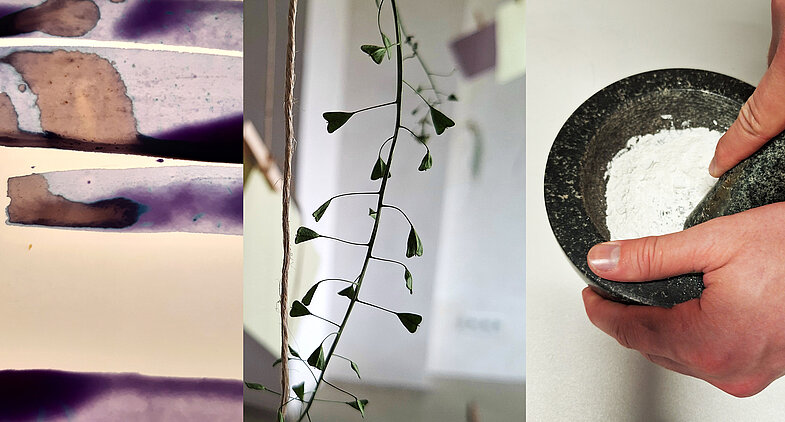
Lina Kusaite is a Brussels-based illustrator and eco-artist whose practice explores the relationship between humans and the natural world. With a multidisciplinary background in art, textiles, and design, she develops concept-driven, detailed illustrations grounded in ecology, biodiversity, and systems thinking. Her work spans editorial illustration, exhibitions, and large-scale botanical murals, as well as participatory workshops that connect creative practice with environmental awareness. She has also collaborated on international environmental research projects, and her work has received recognition and awards within the field of illustration and eco-art.
She develops workshops, visual artworks, and methodological approaches inspired by natural farming and plant guild systems, with the aim of communicating the social intelligence of plants and encouraging reconnection with the natural world. Her practice is rooted in the belief that the divide between humanity and nature has grown too wide, yet can be addressed through local, accessible, and experiential forms of engagement. Within this context, edible plant ecosystems become both a conceptual and practical tool for bridging this gap through observation, collaboration, and care.
www.behance.net/cocooncharacters
Prof. Margo Zālīte is a theater and opera director and dramaturg/curator, researcher, and educator whose work lives at the restless intersection of performance pedagogy, digital cultures, and social justice. With over fifteen years of practice spanning rehearsal rooms, festival stages, and university seminars across Europe and beyond, she brings both intellectual rigor and genuine creative warmth to everything she does.
She holds a professorship in Dramaturgy and Interdisciplinary Music Projects at the Kunstuniversität Graz (KUG), where she is building a new program that puts artistic research, collaboration, and critical thinking at the center of music theater training. She also works at the Institut für Angewandte Theaterwissenschaft, Justus-Liebig-Universität Gießen, which is famous for interdisciplinary collective work, and leads the Sustainable Theater Lab at the Ligeti Center in Hamburg — a hub for community-rooted, ecologically and socially conscious performance projects that she continues to develop with energy and conviction.
From 2020 to 2024 she served as Artistic Co-Director of Theater Festival FAVORITEN in Dortmund, curating a platform for boundary-pushing interdisciplinary work. Earlier, she worked as assistant to the Artistic Director at the Ruhrtriennale, one of Europe’s most adventurous large-scale festivals.
Margo’s practice is shaped by a deep commitment to inclusive and participatory art-making — to creating spaces where marginalized voices are not just represented but genuinely heard. Her current research explores AI, performance, and the question of what a more just artistic practice might actually look like in practice.
22 August - 6 September 2026 (ground floor)
9 September - 4 October 2026 (basement studio (access via the courtyard))
Preview / Curatour's tour in Ukrainian
Saturday, 22 August, 5 pm
Preview / Curatour's tour in German
Saturday, 22 August, 6 pm
Opening
Saturday, 22 August, 7 pm
Artists:
Valentin Bansac and Alice Loumeau (MATTERS.xyz)
Lisa Biletska
Viktor Brim and Emerson Culurgioni
Anna Charlotte Frevel
Paul Granjon
Lina Kusaite
Margo Zālīte
Curators:
Natalia Matsenko, Lex Rütten, Jana Kerima Stolzer, Yuri Yefanov
Title graphic: Matilda Greiner
Images works: © the artists
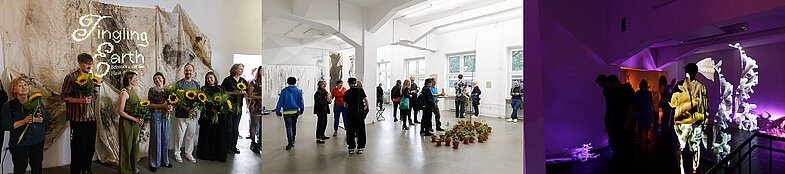
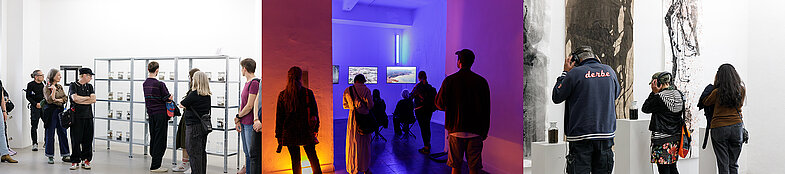
Images opening: © Steven Natusch
Opening hours 22.8. - 6.9.26
Wed - Sun: 11 am - 7 pm
Opening hours 9.9. - 4.10.26
Wed - Sun, 11 am - 6 pm
Parallel in the Laboratorium
SILENT SOLDIERS
Kindly supported by:
Kulturbüro Dortmund, Bergmann Bier
Conviviality After Landscape
organised by the ‘Infrastructure. Aesthetics and Provision’ research group at Ruhr University Bochum
3 - 4 September 2026
Künstler*innenhaus Dortmund
On neglected remnants of infrastructure and industrial ruins, where the subsoil has been left degraded and contaminated, unique ecosystems are emerging that challenge us to reflect on innovative and resilient forms of coexistence and solidarity. This interdisciplinary workshop explores artistic research and participatory approaches that engage with the potential of wounded landscapes, interweaving these with theoretical research.