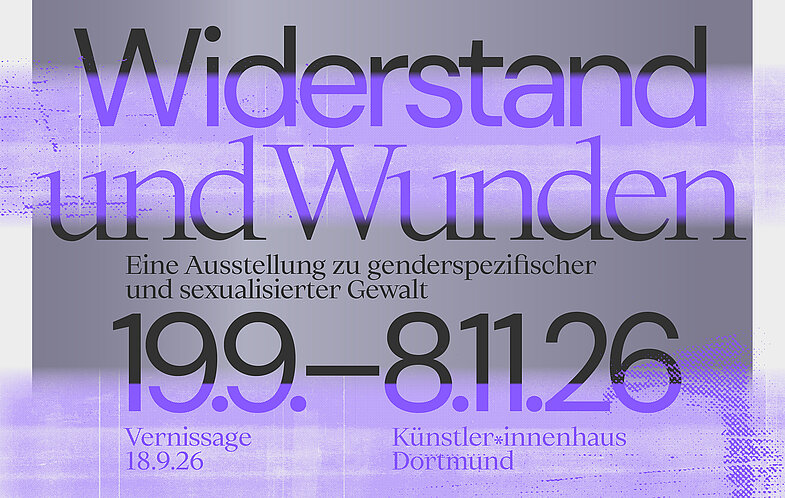
Violence against women, children, queer and trans* people and other marginalized groups is a global reality deeply rooted in social structures, norms, and power dynamics. Through photography, film, installation and text-based works, Jenny Bewer, Raika Er, Suse Itzel, Simone Karl and Jay Ritchie make this violence visible and create a space for exchange and reflection that also highlights possibilities for solidarity and healing.
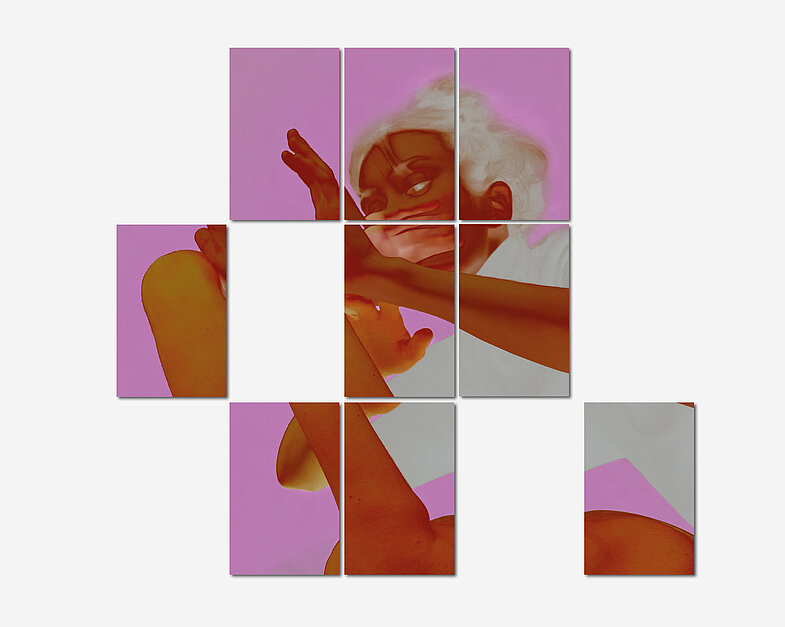
Jenny Bewer (she/her), born 1990, is a photographic artist based in Hamburg. She studied Photography and Media at Bielefeld University of Applied Sciences, graduating in 2016, and received the Bourse du Talent Award in 2015, with exhibitions in Paris, Lille, and Arles.
Her project For Those Who Cared, about losing her father during the Covid pandemic, was selected for the Boutographies Festival in Montpellier and the Portfolio Walk of the German Academy of Photography at Deichtorhallen Hamburg in 2024. In 2025 she took part in Wiesbadener Fototage. From 2021–2024 she was a resident at Künstler*innenhaus Vorwerk-Stift Hamburg and part of Galerie21.
In her work, Jenny Bewer processes traumatic experiences she has lived through emotionally and physically. For her, image-making is an outlet — a way to give concrete form to these experiences and dissolve states of powerlessness. The starting point was a traumatic event during her studies, through which she developed an autoimmune condition — a connection she only recognized years later. Since then, she has engaged intensively with the interplay between trauma and the body as a medium of memory. In doing so, she has come to realize that what she experienced as an individual, deeply personal trauma is at the same time part of a collective experience shared by women. Her body carries a history that is also the history of many others — and it is precisely within this tension between the deeply personal and the shared experience that her artistic work emerges.
Her work has been published in DIE ZEIT, Stern, and FAZ Quarterly. As a boardmember of the collective herspective, she advocates for greater visibility of women in photography.
Raika Er is an interdisciplinary artist, performer, and filmmaker. In her work, she explores the themes of post-migrant identity and resilience. Working across media, she engages with questions of intergenerational memory, intersectional and material feminisms, and belonging.
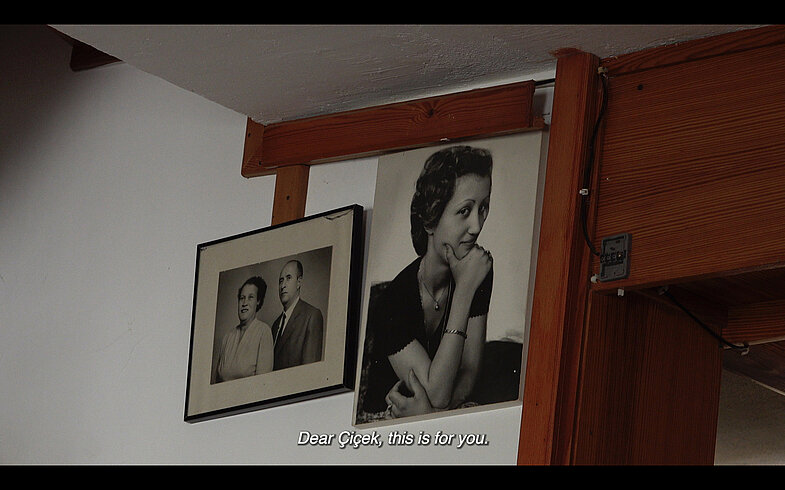
In Für Çiçek, an experimental documentary developed between 2022 and 2025, she returns together with her mother to her grandmother’s house in Turkey, which has been abandoned for years. Für Çiçek traces the imprints of racist and patriarchal violence across generations and ask whether a language can be found for the unspeakable, and whether healing is possible.
The work TO HOLD WHAT BREAKS situates anger as a marginalized emotion within social and political relations. It is based on the idea that anger is not equally legitimate for everyone: while it is often perceived as strength or assertiveness in privileged individuals, it is pathologised, devalued, or marked as a threat when expressed by FLINTA* and BIPOC individuals. Drawing on Sara Ahmed, anger is understood not as a purely internal psychological state, but as a relational force that circulates between bodies, norms, and meanings. Where anger connects personal experience with structural critique, it becomes the starting point for emancipatory movements.
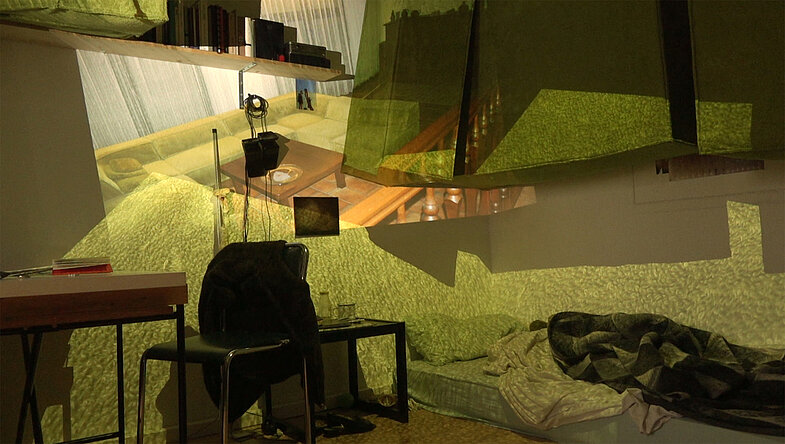
Suse Itzel (b. 1984) is a filmmaker, artist, and author. Across various media, she explores memory, trauma, and sexualized violence. Her autobiographical short film I would have liked to make a different film has been screened at numerous film festivals and has won several awards. Projections of childhood spaces wander through rooms and color the present. The family appears only as a void. The filmmaker’s voice narrates the sexualized violence she suffered at the hands of her family as a child and the consequences such violence can have. In addition to her cinematic approach, working with spoken and visualized text is central to Suse Itzel’s practice. Therapy forms and files become her material. In the installation Rechtsprechungsdatenbank NRW, she approaches the court and the judicial system with longing and concern, both as an artist and as a survivor. Suse Itzel studied at the University of Fine Arts in Hamburg and at the Academy of Media Arts in Cologne. She is currently working on the concept for her first feature-length documentary. In Cologne, she is also a co-founder of the queer-feminist reading and talk series [OHNE PRONOMEN].
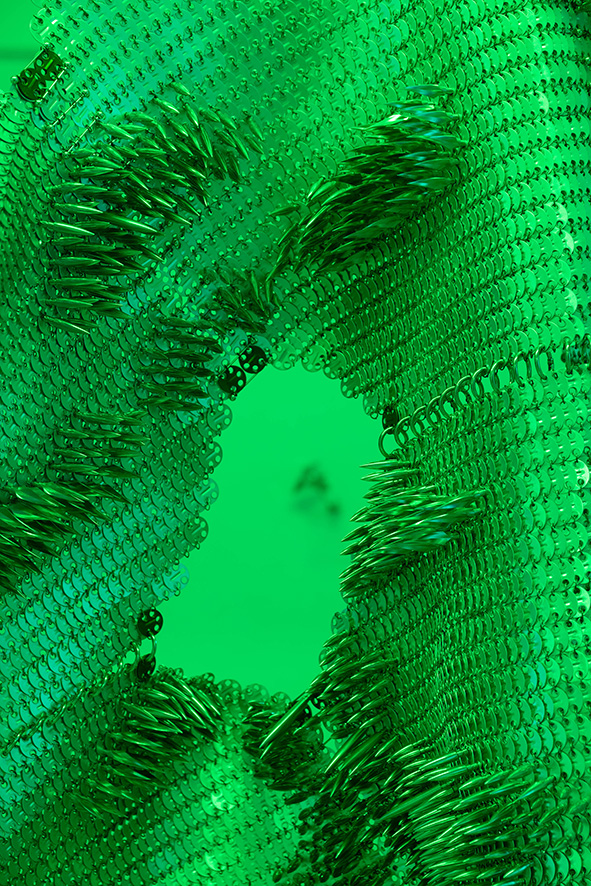
Simone Karl is a Hamburg-based visual artist working across sculpture, installation, object, and collage. She explores the resilience of vulnerable bodies and their capacity for resistance. She is particularly interested in their ability to sustain tensions between seemingly opposing states. Defense and attraction, safety and danger, protection and attack emerge not as binary opposites but as intertwined forces, whose coexistence gives rise to forms that are at once inviting and dangerous, confronting threat while resisting reduction to passivity.
She received her Master of Fine Arts from HAW Hamburg in 2017. This was followed by artist residencies in France, Italy, Poland, Portugal, Spain, Slovenia, and Germany. She is a recipient of the stART.up scholarship from the Claussen–Simon Foundation and the annual scholarship of the Sparkassen-Kulturstiftung Stormarn.
Her work has been presented nationally and internationally, including at lokal_30 (PL), Goyki3 Art Inkubator (PL), Kunsthaus Baurs Park (DE), Kunsthaus Erfurt (DE), Kunsthaus Hamburg (DE), Kunstverein Gastgarten (DE), Kunsthalle Wilhelmshaven (DE), Galerie in der Wassermühle Trittau (DE), Michael Cacoyannis Foundation (GR), and Kunstverein Erlangen (DE).
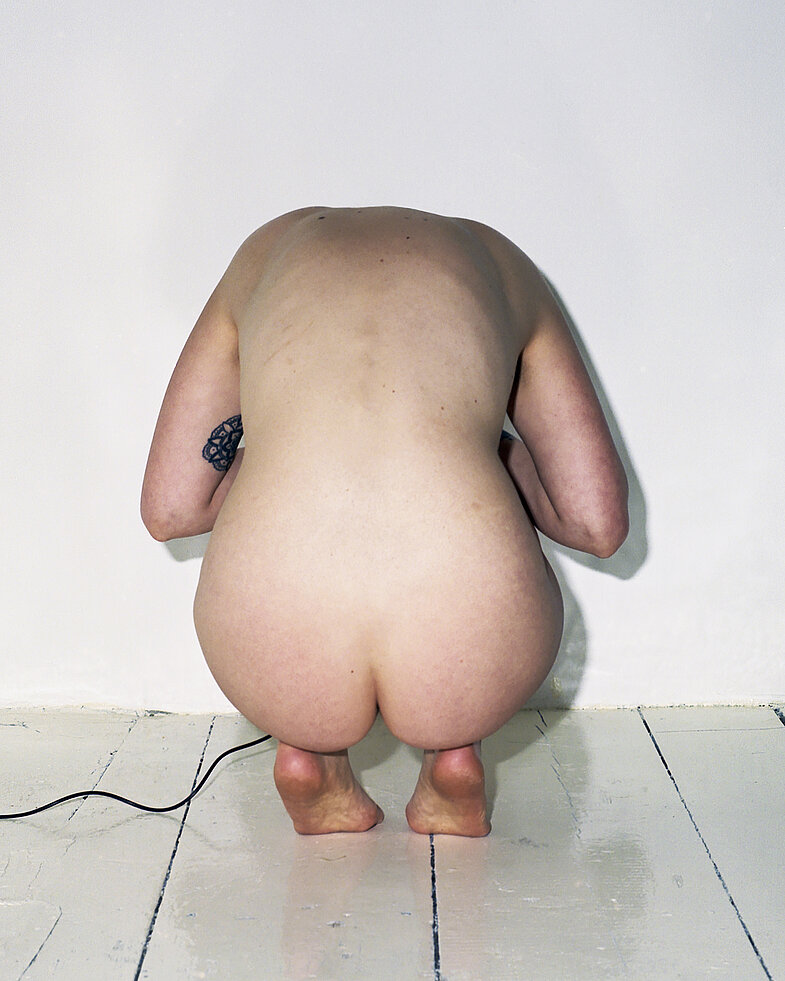
Jay Ritchie (they/them) is an artist from Berlin whose practice combines interdisciplinary and transdisciplinary approaches. Through installations, photographs, audio works, video performances, and text-based works, they explore identity, queer visibility, and the questioning of normative structures. In various works, Ritchie, as a survivor, addresses traumas that are explored and made visible through the artistic process. The focus is on coming to terms with the visible and invisible traces of sexualized violence, which can have a lasting impact on the body, thought, and action. The body appears both as the bearer of trauma and as a site of processing, healing, and resistance—vulnerable and resilient at the same time. Ritchie moves beyond the individual perspective to understand these experiences as a collective phenomenon that society must address. Through this approach, Ritchie creates a space for engagement that powerfully and from a queer-feminist perspective addresses the themes of shame, guilt, and self-assertion, and conceives of vulnerability as a political act.
Ritchie completed their postgraduate studies under Prof. Tina Bara at the Academy of Fine Arts Leipzig, having already earned their diploma there in 2020. Prior to that, they graduated from the Ostkreuz School of Photography and Design in Berlin in 2016. Ritchie is a recipient of the 2026 BMW Photo Award, the 2020/21 gute aussichten – junge deutsche fotografie award, and the German Youth Photography Prize, among others. Their work has been exhibited at the MdbK Leipzig, Deichtorhallen Hamburg, Landesmuseum Koblenz, and Spinnerei Leipzig.
19 September - 8 November 2026
Preview / Curator's tour
Friday, 18 September, 5.30 pm
Opening
Friday, 18 September, 7 p,
Artists:
Jenny Bewer
Raika Er
Suse Itzel
Simone Karl
Jay Ritchie
Curators:
Maria Schleiner, Elly Valk-Verheijen
Curator's tours
Saturday, 19 September
5 pm, 7 pm and 9 pm
Title graphic: Carla Selva Matthes
Images works: © die Künstler*innen
Kindly supported by:
Kulturbüro Dortmund, Bergmann Bier
Anna Papoulias: Trauma - Schweigen und Kreativität
Lecture Performance with Anna Zirr
24 October, 6 pm
Ich darf sie immer alles fragen
15'09 min, 2023
Film Screening & Artist Talk with Silke Schönfeld
6 November, 6 pm